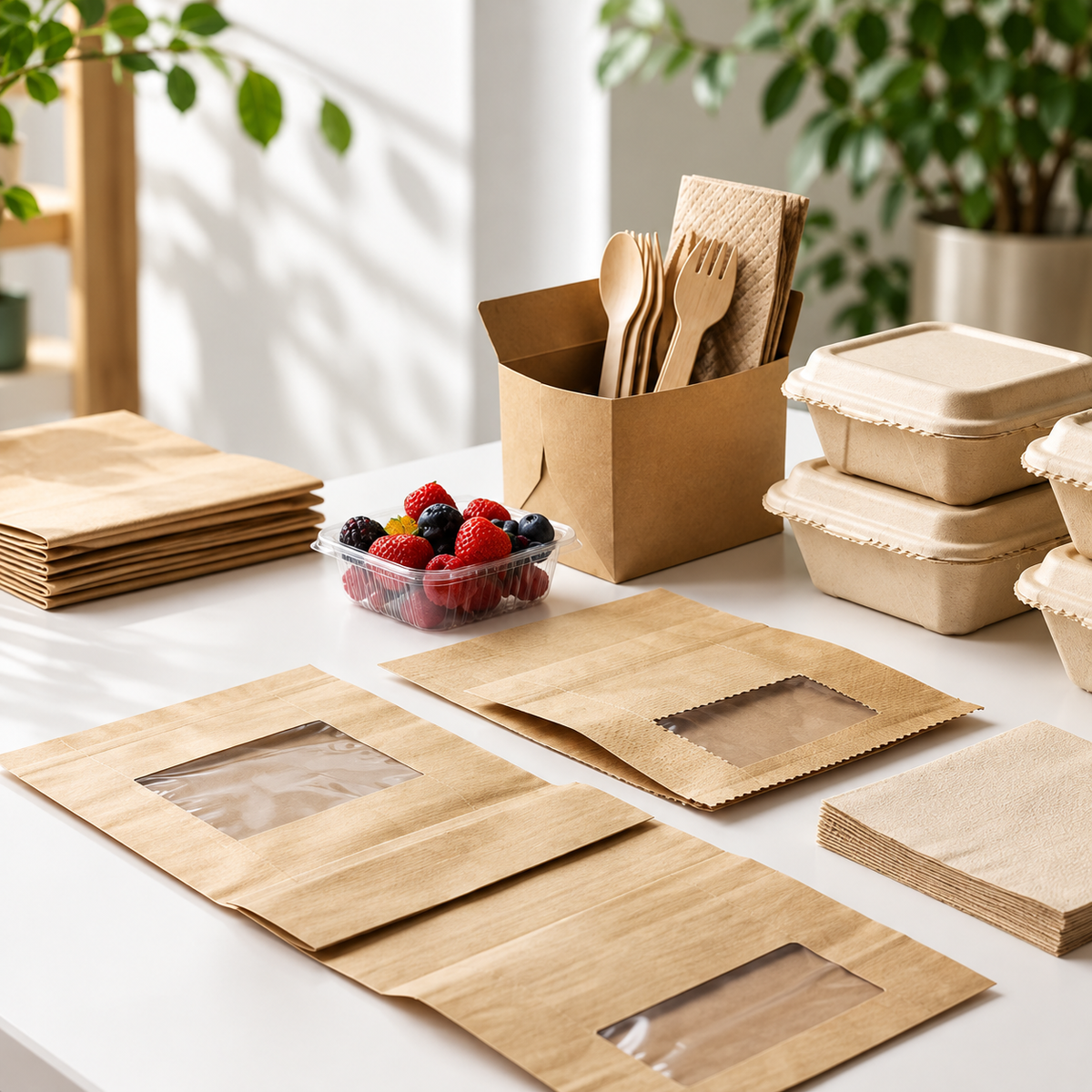
When you work with food, there is one thing you must never compromise on: packaging must be approved for food contact. This applies whether you run a café, bakery, farm shop or specialty store.
What does food-contact approved packaging mean?
Food-contact approved packaging is manufactured and tested so it does not release harmful substances into the food. It may sound technical – but in practice it’s simply about choosing the right products. Typical examples include:
- Bags for bread and cakes
- Paper for wrapping cheese or deli items
- Cups and boxes for takeaway
- Cellophane and plastic for confectionery and speciality items
Look for the symbol with a glass and fork – it’s your proof that the material is approved for use with food.
Why is it important?
Of course it’s about health and safety – but also about trust. Your customers need to be able to rely on the fact that what they buy from you is packaged correctly. And when the authorities visit, you are much stronger if your documentation is in order.
It has always been good business practice to do things properly – and today the requirements have been tightened. Documentation has become a natural part of operations, and it doesn’t have to be complicated.
Find the right packaging for your business
At SuperSellerS we carry a selection of packaging approved for food contact – so you can easily find what you need. If you’re unsure which solution suits your shop, you are always welcome to ask us – we’re happy to help find the right specification.